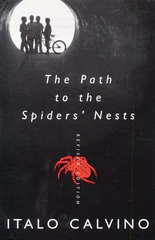
The Path to the Spiders' Nests
Il sentiero dei nidi di ragno
The preface, written 20 years after the novel, felt true to Calvino in his If on a winter's night a traveler phase phase -- lots of hesitations and restarts, communicating by layering, even if I didn't capture everything he was saying. Outright contradictions like: maybe authors should only ever write one novel OR authors should never share their first novel. I think it might make sense so reread this later in the year.
As for the story itself: it's a constructed story that supposedly rhymes with Calvino's experiences during the war as part of the partisan resistance in Italy -- but reframed and filtered through the experiences of a young boy. Calvino would've been around 20 or a little older at this time, but Pin is obviously much younger. I interpret him as ... maybe 7 or 8 years old? He's got a jaundiced view of humanity (which, to be fair, his cobbler master is in and out of jail and beats him, his sister is a prostitute, and he doesn't have any real relationships with kids his own age), but his way of interacting with the rest of the world is still childlike and fantastical. The joy he takes in knowing about the spiders' nests, and the way he describes them, feel like a bridge between fairy tales and the magical realism Calvino will explore in later work.
This is a tricky book, with a lot of moving parts even though relatively little happens -- and everything that happens is filtered through Pin's immature perceptions, so some things are hinted at more than said (even as he has more experience with some topics, like infidelity, than we might want for a kid his age)
This is a book about boys and men -- or a boy and men -- and it's a bit troubling in its depiction of women. Cousin, the closest to a positive relationship that Pin has, is deeply misogynist. Pin's sister (Rina, named only at the end of the book) is universally looked down upon and serves as a symbol of betrayal by the end. Giglia seems mostly present to complicate the social dynamics in the battalion of partisans, and even Pin eventually ends up sexualizing her (briefly fantasizing about touching her breast when he's older). I don't remember this being a theme in the other works of Calvino's that I've read -- and there's a gesture towards an in-story explanation for the masculine and anti-feminine nature of the battalion -- but it's something I'll be watching for now.